
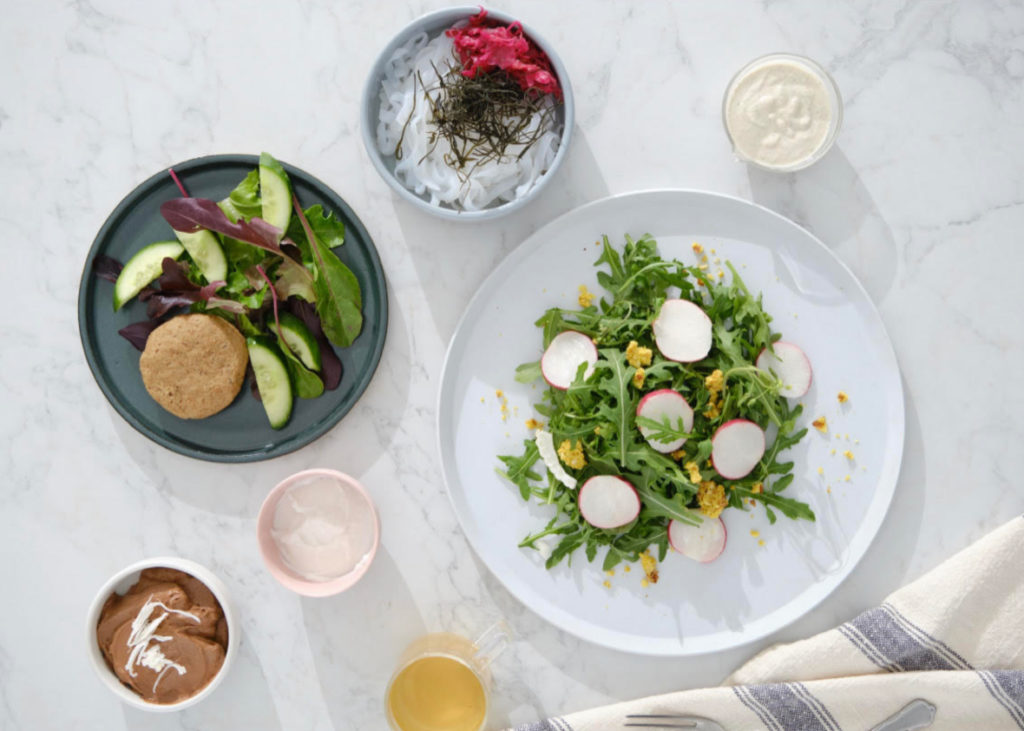

Kanten Tokoroten with Ashitaba – Refreshing Jelly Noodle
One of my favourite dishes growing up in Japan was

We often think of skin issues as separate from the rest of our health, something to treat with the right cream, cleanser, or serum. But when we see our body holistically, skin has never been viewed in isolation. It’s considered a direct reflection of what’s happening inside the body.
If your skin is dry, dull, breaking out, or ageing faster than you’d like, it’s useful to ask what’s happening internally that’s showing up on the surface.
In Eastern Medicine, the skin is closely connected to the Lungs, which govern the body’s Qi and fluids and nourish and moisten the skin from within. Skin is also deeply tied to the Blood and Yin, the body’s nourishing, hydrating reserves.
This means that skin isn’t just a surface-level organ. It’s an outward expression of your internal balance. Dryness, breakouts, dullness, and premature ageing are all considered signals, not just isolated cosmetic issues, pointing to what’s happening with your Qi, Blood, or Yin beneath the surface.
Rather than treating each of these symptoms individually and only on the surface, we should look at the root pattern that causes them because the same underlying imbalance can manifest as several different skin symptoms at once.
Two of the most important internal factors for skin health in Eastern Medicine are Blood and Yin.
Blood nourishes and moistens the skin, hair, and nails. When Blood is abundant, skin appears plump, smooth, and evenly toned. When Blood is deficient, skin can look pale, dry, or thin, and hair may become brittle.
Yin represents the body’s cooling, moistening fluids: the deep hydration reserve that keeps skin supple and dewy. As Yin naturally declines with age, stress, or overwork, skin often becomes drier and less resilient, which is why Yin depletion is so closely tied to visible signs of ageing.
Because both Blood and Yin are considered foundational to radiant skin, many traditional beauty formulas focus on nourishing these reserves rather than only treating the skin topically.
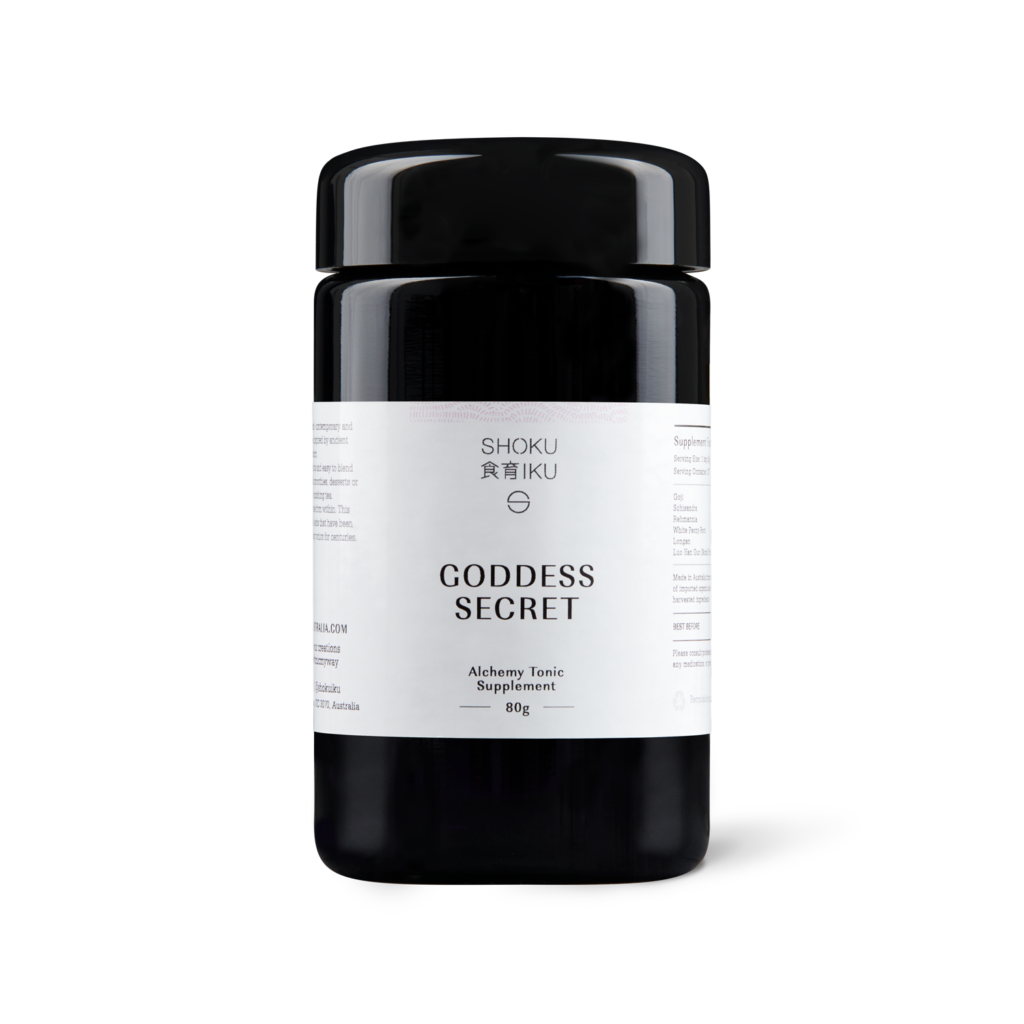
Rather than only addressing skin from the outside, TCM uses herbs that nourish Blood and Yin to support skin health at its root. This is the philosophy behind our Goddess Secret Alchemy Blend, which includes:
Beyond Goddess Secret, we also carry a couple of other standout herbs specifically prized for skin in Eastern Medicine :
Together, these herbs reflect the TCM approach to beauty: rather than chasing surface-level symptoms, they aim to replenish the internal reserves, Blood and Yin, that skin depends on to truly thrive.
One of my favourite dishes growing up in Japan was
If you’ve ever felt “burnt out”, dry skin, restless nights,
In our search for the highest-quality functional support, we’ve landed